Why does the same task feel easy one day and exhausting the next? Explore how your starting mental state, previous workload, and recovery affect cognitive effort, and how recognizing personal patterns can help you plan your work more effectively.
The Observer by Advancify
Research and ideas for understanding how we work, focus, and recover.
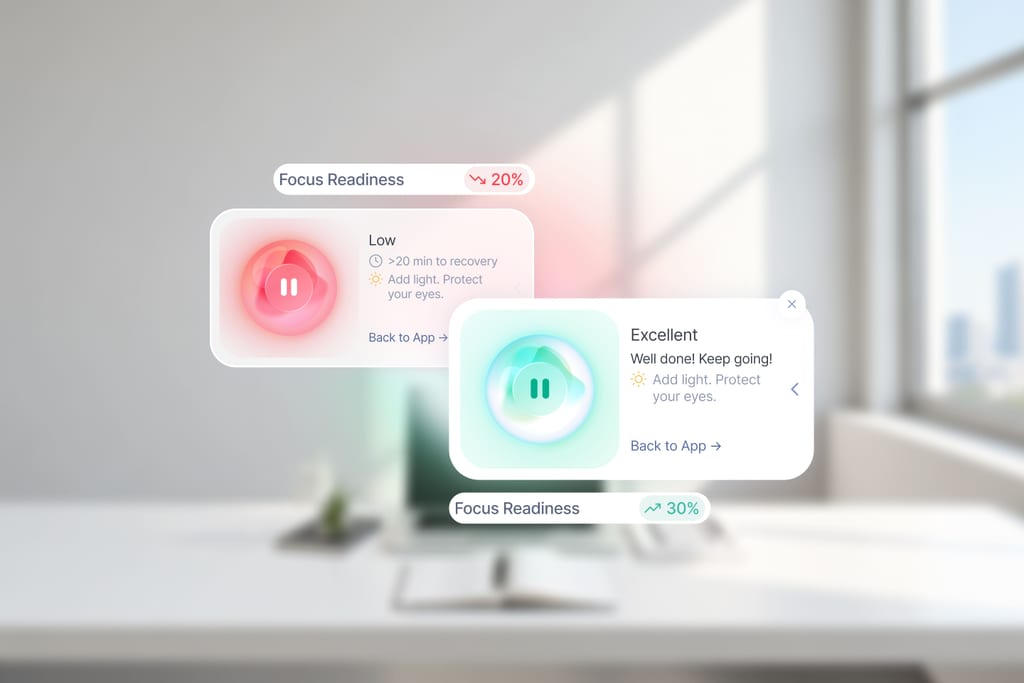
Why do difficult tasks sometimes feel impossible to start? Explore how mental energy, cognitive effort, and your current state affect task initiation, and why choosing the right moment can make demanding work feel more manageable.
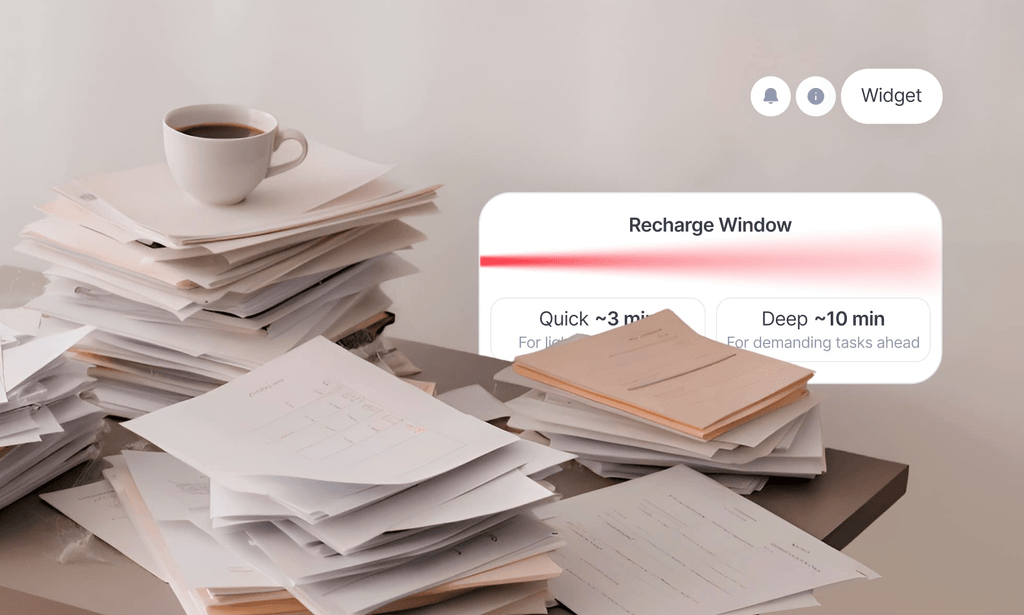
Mental fatigue doesn’t just cause mistakes. It makes them harder to notice.
Mental fatigue can affect more than concentration. Discover how prolonged cognitive effort changes performance, error detection, and the ability to correct mistakes, and why feeling fine doesn't always mean you're working as effectively as before.
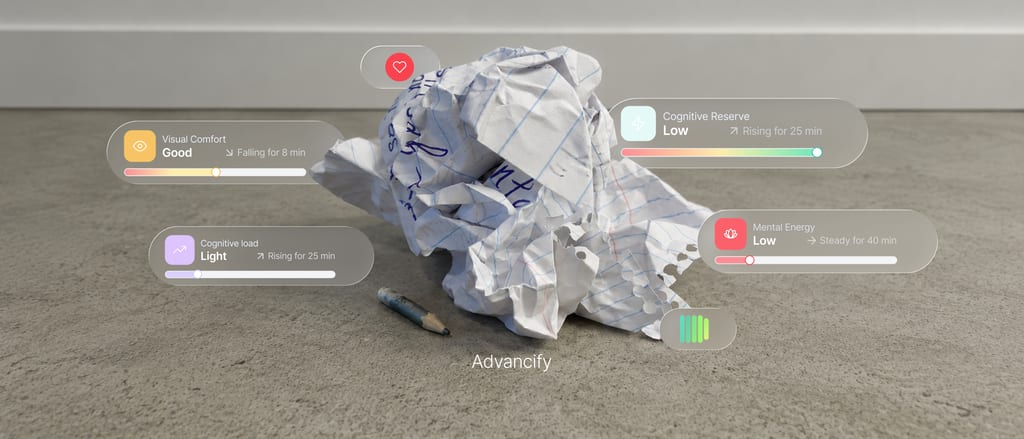
Discover Mental Energy and find your best moments for focused work
Why does your ability to focus change throughout the day? Explore how circadian rhythms, accumulated workload, and recovery influence Mental Energy, and how recognizing your personal patterns can help you plan demanding work more effectively.

Why do you feel exhausted after work, with no energy left for your personal life? Explore how mental workload, insufficient recovery, and daily work patterns affect your evenings, and what can help you preserve more energy.
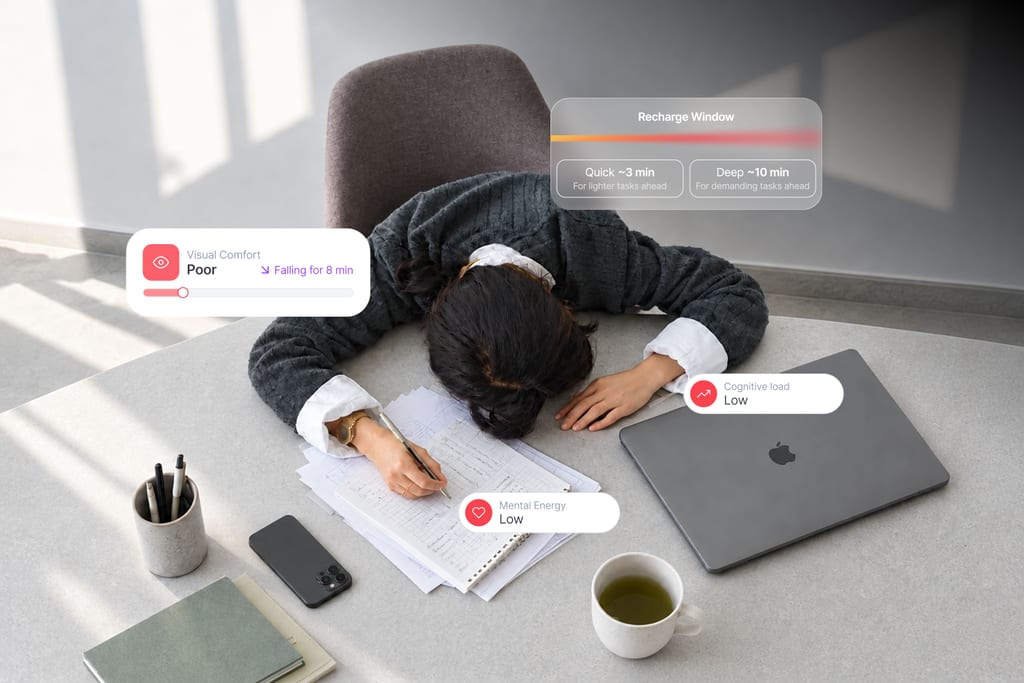
Cognitive Reserve isn't a percentage of mental capacity left. Learn how this personalized Advancify metric differs from Mental Energy and how it can help you plan demanding tasks, manage cognitive effort, and use your remaining resources wisely.
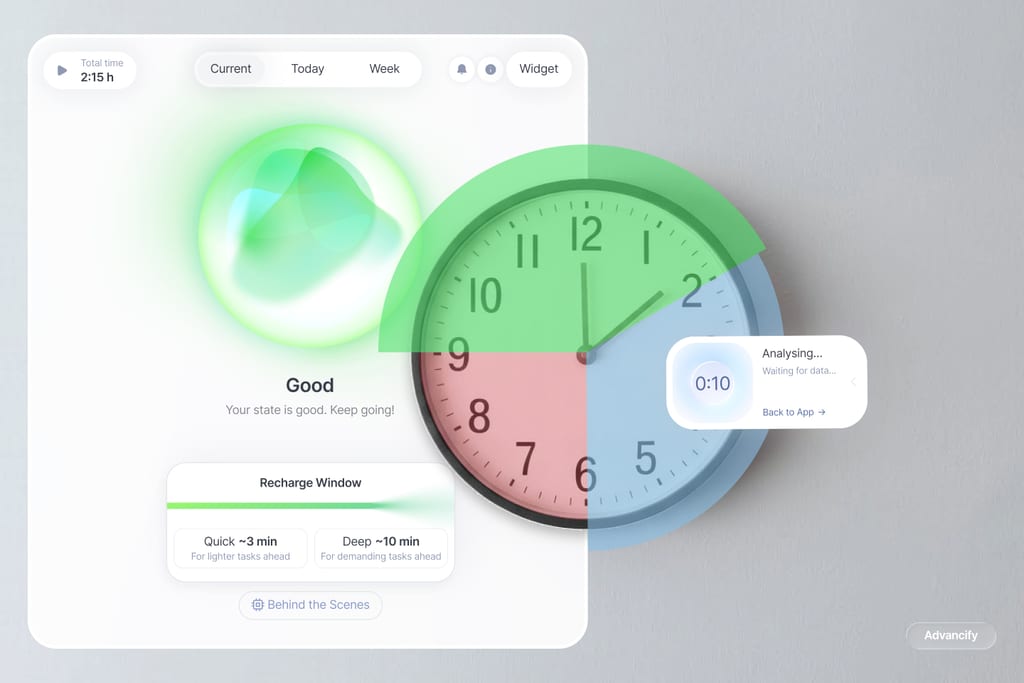
Learn how Advancify metrics work together to give you a clearer picture of your state. Understand what different combinations of Focus Readiness, Mental Energy, Cognitive Load, Visual Comfort, and Cognitive Reserve mean for your workday.
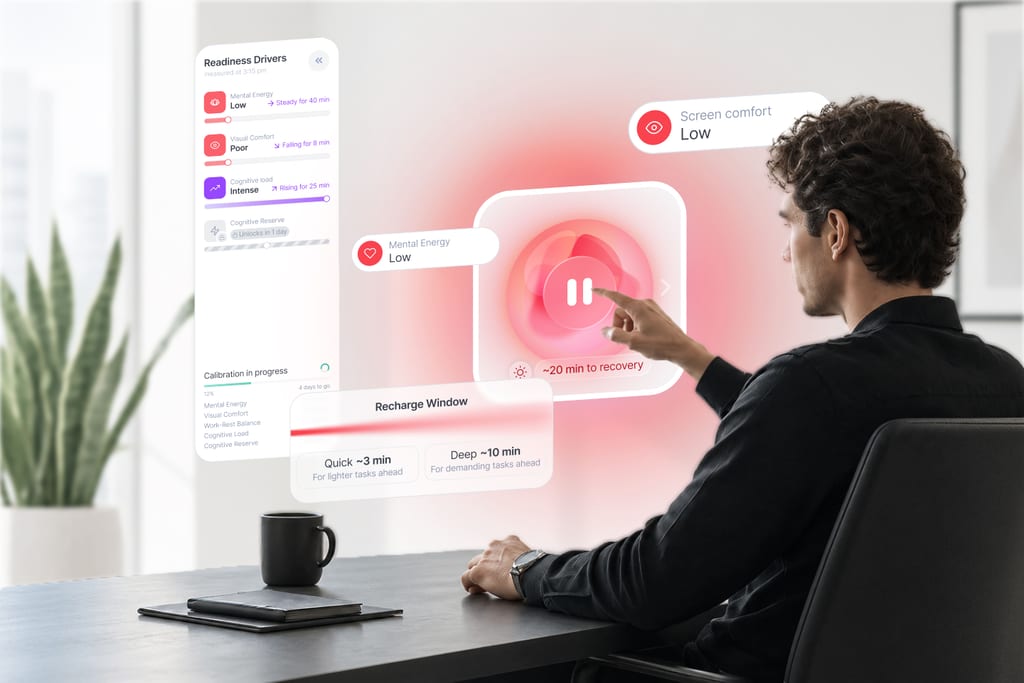
Discover Cognitive Load and make demanding work more sustainable
High Cognitive Load isn't necessarily a bad sign. Learn why demanding work naturally requires more mental effort, how to interpret Cognitive Load alongside other Advancify metrics, and when sustained effort may signal a need for recovery.

Feeling fine doesn't always mean your mental performance is unchanged. Explore why subjective fatigue and measurable changes don't always align, how motivation can mask growing effort, and why recognizing early patterns can help you take breaks at the right time.
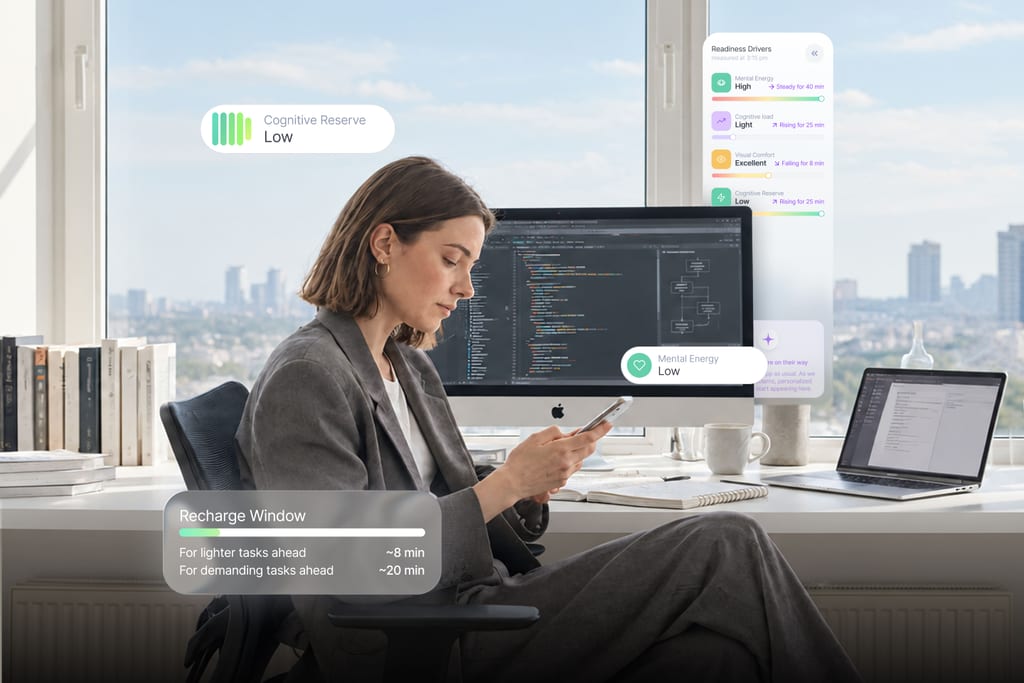
Discover Recharge Window and make recovery part of your performance
Taking a break isn't necessarily lost productivity. Explore how timely recovery can support your next work session, why different workloads call for different breaks, and how Recharge Window helps you decide when to pause.
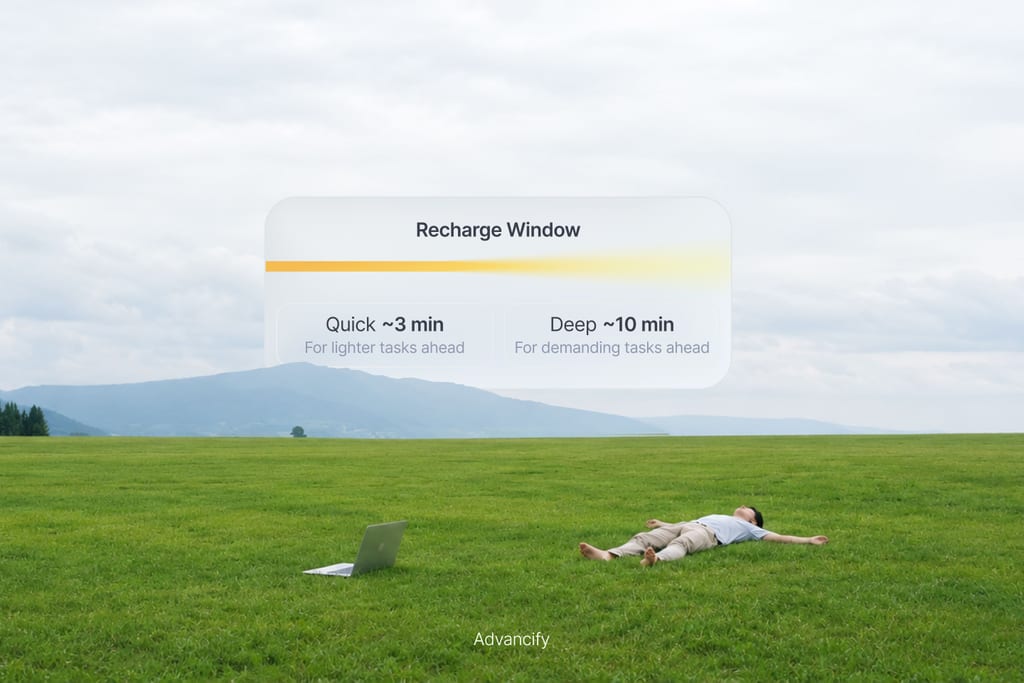
Taking breaks matters, but when you take them may matter just as much. Explore the research behind break timing, why fixed timers can't account for your changing mental state, and how personalized recovery can help you work more effectively.

No articles in the selected categories yet.